Hantavirus on a Cruise Ship, Three Dead, and a 2022 Tweet That Has the Internet Spooked
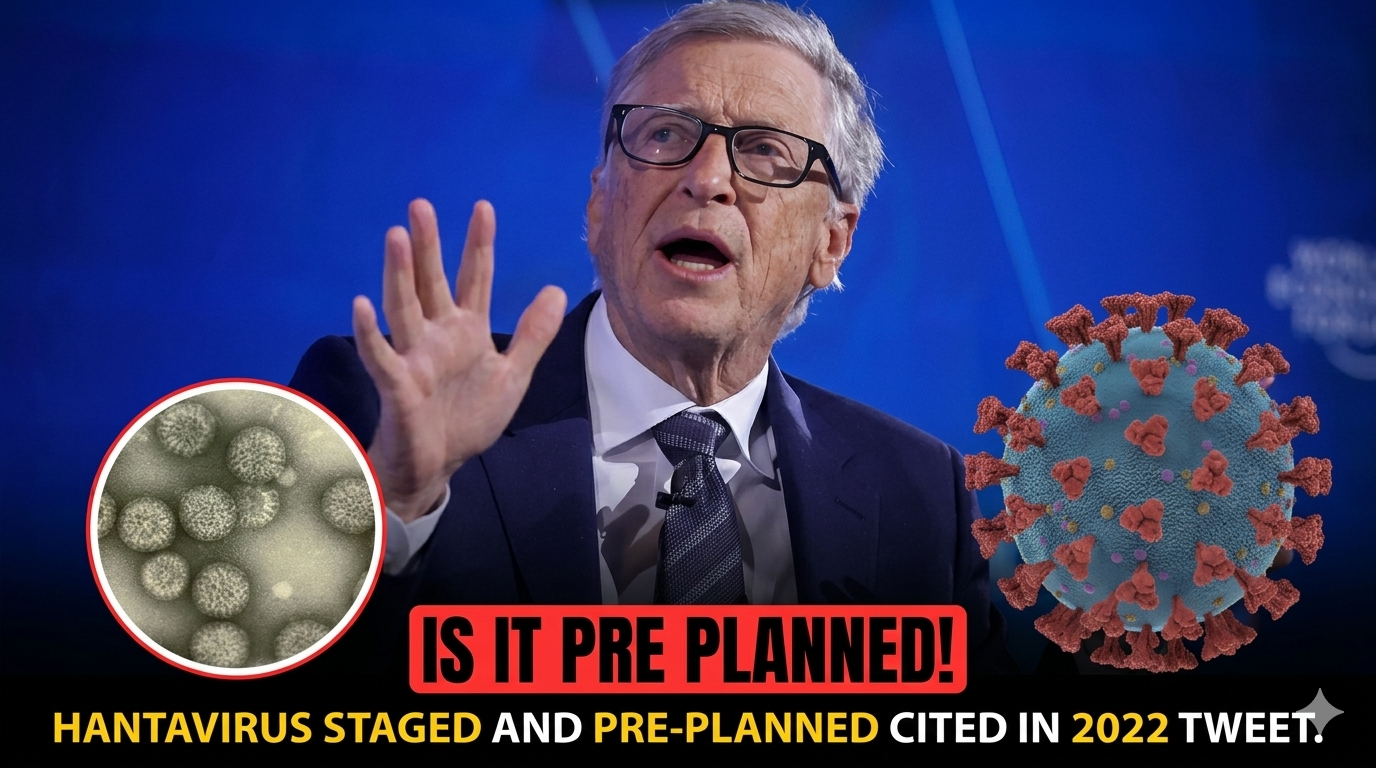
A deadly virus on a luxury cruise ship. Three confirmed deaths. Eight cases reported by the World Health Organization. Two Britons quietly self-isolating at home. And somewhere on the timeline, a forgotten tweet from June 2022 that just predicted the year 2026 with chilling accuracy.
This is not a Netflix script. This is the story unfolding right now — and the internet, for once, has every reason to be paying attention.## What's actually happening?
Earlier this month, the World Health Organization received an emergency notification from the United Kingdom about a cluster of severe respiratory illness on board a Dutch-flagged expedition cruise ship called the MV Hondius. By the time labs in South Africa got to work, the diagnosis was confirmed: Hantavirus.
According to the WHO Disease Outbreak News bulletin published on 4 May 2026, seven cases had been identified in the first wave — two laboratory-confirmed, five suspected — including three deaths and one critically ill patient in intensive care. By the time WHO Director-General Dr Tedros Adhanom Ghebreyesus addressed the press a few days later, the count had risen to eight: five confirmed, three suspected.
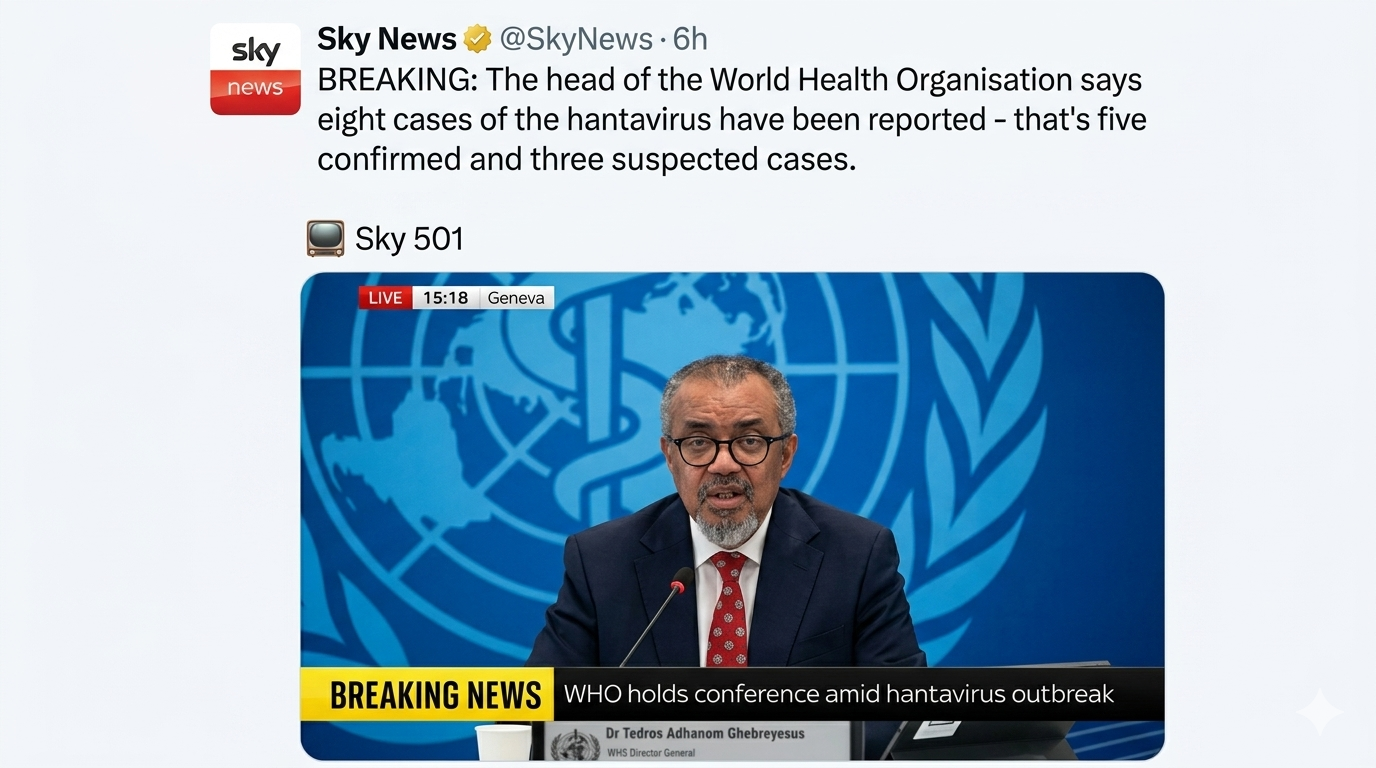
The ship had set sail from Ushuaia, Argentina, on 1 April, then traced a route across the South Atlantic with stops at some of the most remote corners of the planet — mainland Antarctica, South Georgia, Tristan da Cunha, Saint Helena, Ascension Island. Romantic on a brochure. Catastrophic when a rodent-borne virus is on board.
By the time the alarm was raised, passengers from at least 12 different nationalities had already disembarked at various ports, scattered across continents, and gone home. As PBS NewsHour reported, no contact tracing was done before they left — nearly two weeks after the first death on board.
The British angle
The first country to publicly flag the situation was the United Kingdom. According to BBC News, two British nationals who had been on the ship returned home and are now self-isolating, with the UK Health Security Agency (UKHSA) monitoring them closely.
Officially, the risk to the public is described as very low. Hantavirus does not spread the way COVID did. It's primarily a rodent-borne disease — humans usually catch it through contact with the urine, droppings, or saliva of infected rats and mice, not from each other. But "very low" is not "zero," and the Andes strain of hantavirus has, in rare past outbreaks, shown limited person-to-person transmission. Health authorities are not taking chances.
Then the internet found that tweet
While WHO scientists were sequencing samples and contact tracers were chasing flight manifests, a different kind of investigation was happening online.
Someone dug up an old post from an X (formerly Twitter) account called @iamasoothsayer — a user whose bio simply reads "reads the future." The post, dated 11 June 2022, says only this:
2023: Corona ended
2026: Hantavirus
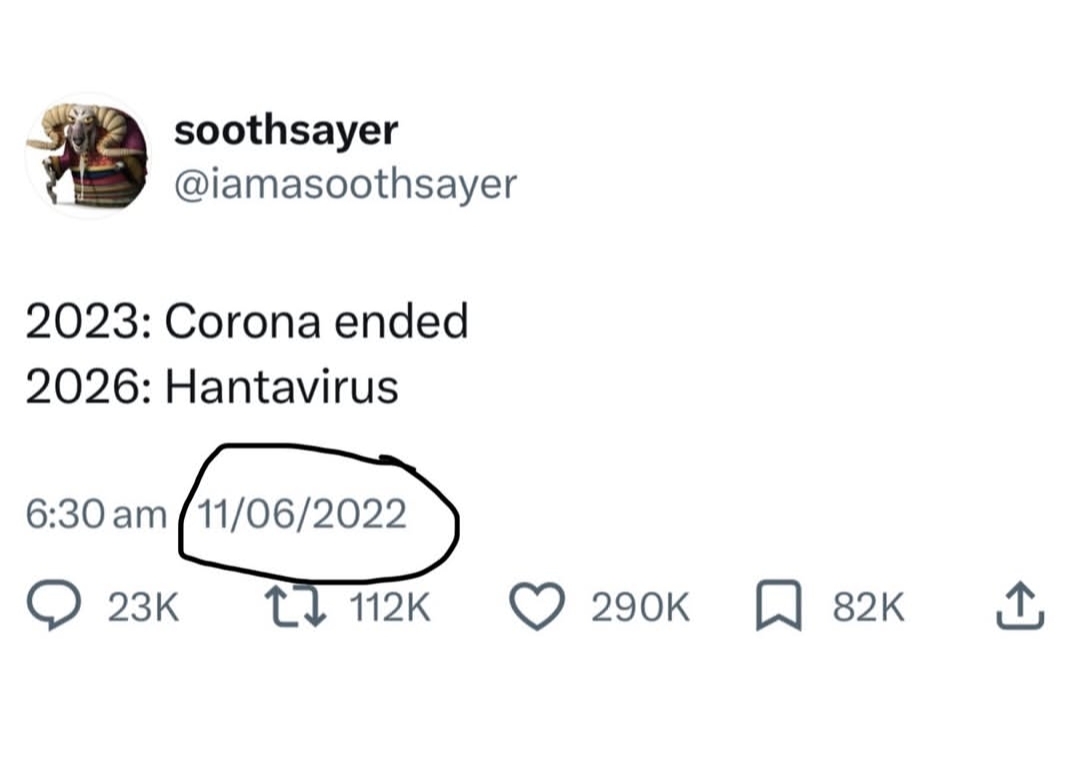
That's it. No context. No explanation. Just two lines, posted nearly four years before any of this hit the news.
The tweet has since exploded — 290,000 likes, over 112,000 reposts, 23,000 comments, and rising. Independent users running the post through Grok and other verification tools say there's no sign it has been edited since 2022. Investigative threads on X have noted that the account in question only posted four times in a single week back in 2022, then went silent. One of those four posts is the one everyone is now staring at.
Coincidence? A lucky guess? A leak? Nobody knows. But the screenshot is now permanently etched into 2026's cultural memory.
The Bill Gates clip making the rounds
Adding fuel to the fire is a resurfaced clip of Bill Gates appearing on The View in 2025, where he warned that the next pandemic could be far worse than COVID-19. The clip — originally part of a book promotion for his pandemic-preparedness work — is now being shared by hundreds of accounts alongside the hantavirus headlines, with the obvious implication left for viewers to fill in.

Gates has been talking about pandemic preparedness for over a decade. His 2015 TED talk on the same subject has more than 50 million views. To his supporters, he's a Cassandra finally being proven right. To his critics, the timing of every prediction is a little too neat.
We're not here to settle that debate. We're just noting that, between an old soothsayer tweet, a Gates clip, and a real ongoing outbreak, the internet has connected dots faster than the WHO can issue press releases.
What hantavirus actually is
Strip away the conspiracy buzz and here are the medical facts.
Hantavirus is a family of viruses carried by rodents. Two main syndromes occur in humans: Hantavirus pulmonary syndrome (HPS), which is the dangerous, lung-attacking form most common in the Americas, and Hantavirus hemorrhagic fever with renal syndrome (HFRS), more common in Asia and Europe.
Symptoms usually appear one to eight weeks after exposure. Early signs include fever, headache, muscle aches, chills, and stomach problems — easy to mistake for flu. Then, in the dangerous form, the patient suddenly develops shortness of breath, fluid in the lungs, and shock. Once the pulmonary phase begins, deterioration can be rapid.
There is no specific antiviral. There is no licensed vaccine. Treatment is supportive — oxygen, fluids, ICU care. According to WHO data, the case fatality rate for the South American Andes-type strains can run as high as 50 percent.
This is why the cruise-ship cluster, even at single digits of confirmed cases, is being treated as a serious international event.
The ship today
As of the most recent updates from WHO and the UK's NaTHNaC travel health service, the MV Hondius is moored off the coast of Cabo Verde. Remaining passengers and crew have been told to keep distance, stay in their cabins where possible, and report symptoms immediately. Medical teams from Cabo Verde and the European Emergency Response Coordination Centre are on the case. Samples are being shipped to South Africa and Senegal for further analysis.
Twelve countries — including the United Kingdom, the United States, Canada, the Netherlands, and Spain — have been notified that some of their citizens were on board. As LatestLY reported, public health agencies in those countries are now tracing returning travelers.
So, are we "deadass," as one viral post asked?
Probably not. Hantavirus is not COVID-19. It is not airborne in the way flu or SARS-CoV-2 is. The chain of transmission almost always runs through rodents, not crowded subways. WHO has explicitly said the global risk is currently low and has advised against travel restrictions.
But the public reaction tells you something the official statements don't. After five years of pandemic fatigue, lockdowns, vaccine debates, and broken trust, people no longer wait for institutions to tell them what to think. They scroll. They screenshot. They connect dots — sometimes wisely, sometimes wildly. And when a forgotten 2022 post lines up with a 2026 headline, even the most rational mind pauses for a second.
Whether the soothsayer was lucky, leaked, or just loud, one thing is certain: the conversation about pandemics, preparedness, and who knew what when is back. And it isn't going anywhere.
Sources & References
- World Health Organization — Disease Outbreak News, 4 May 2026: Hantavirus cluster linked to cruise ship travel, Multi-country
- PBS NewsHour: Dozens of passengers left hantavirus-stricken cruise ship after 1st fatality
- BBC News — coverage of UK self-isolation cases: bbc.co.uk
- NaTHNaC (UK travel health service): Hantavirus cruise ship outbreak
- LatestLY: WHO Confirms 5 Hantavirus Cases Linked to MV Hondius Cruise Ship Outbreak
- World Health Organization — Hantavirus fact sheet
- Centers for Disease Control and Prevention — Hantavirus Prevention
- Mayo Clinic — Hantavirus Pulmonary Syndrome