Socotra Island: The Most Alien Place on Earth That Humans Can Actually Visit
There is a place on this planet where the trees look like giant mushrooms, the sand dunes rise like sleeping giants against ancient cliffs, and the ocean is so clear you can count the stingrays beneath your boat.
It is not a painting. It is not a CGI sequence from a Hollywood film.
It is Socotra Island — a remote archipelago in the Arabian Sea, belonging to Yemen, and widely considered the most biologically unique place on Earth.
When photographs of Socotra began circulating online, millions of people had the same reaction: "Is this real?"
The answer is yes. And it is even more extraordinary up close.
Where Exactly Is Socotra?
Socotra sits roughly 350 kilometers south of the Arabian Peninsula and about 240 kilometers east of the Horn of Africa. Technically part of Yemen, it floats in a geographic limbo — closer to Somalia than to the Yemeni mainland, isolated from the rest of the world for an estimated 6 to 20 million years.
That isolation is the key to everything.
When the landmass that became Socotra broke away from the supercontinent of Gondwana, it took its plants and animals with it — and then evolution ran its own private experiment for millions of years, with no interference from the outside world.
The result is an island so biologically distinct that scientists describe it as a living laboratory — a window into what Earth looked like long before humans arrived.
The Island That Looks Like Another Planet
The Dragon's Blood Trees
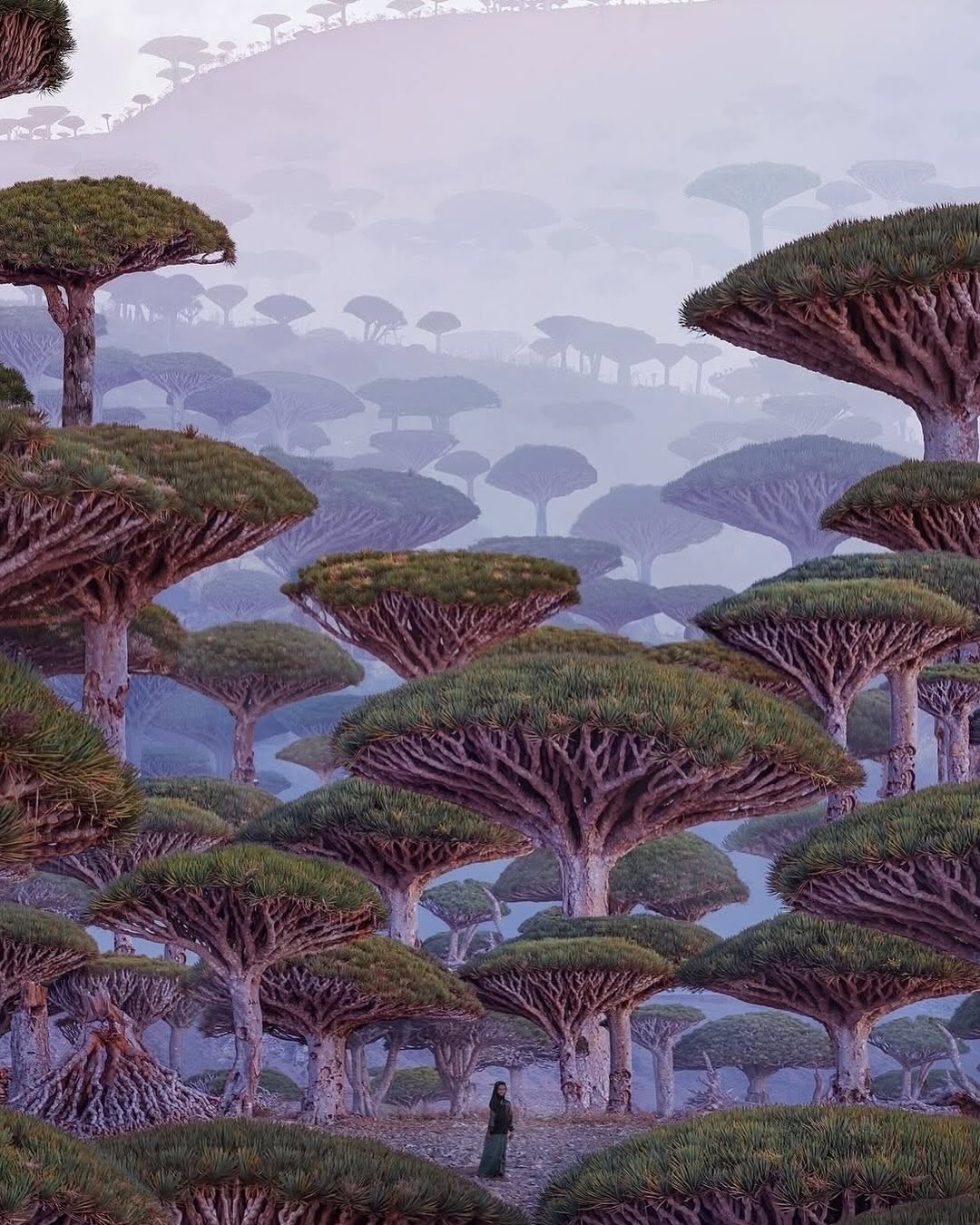
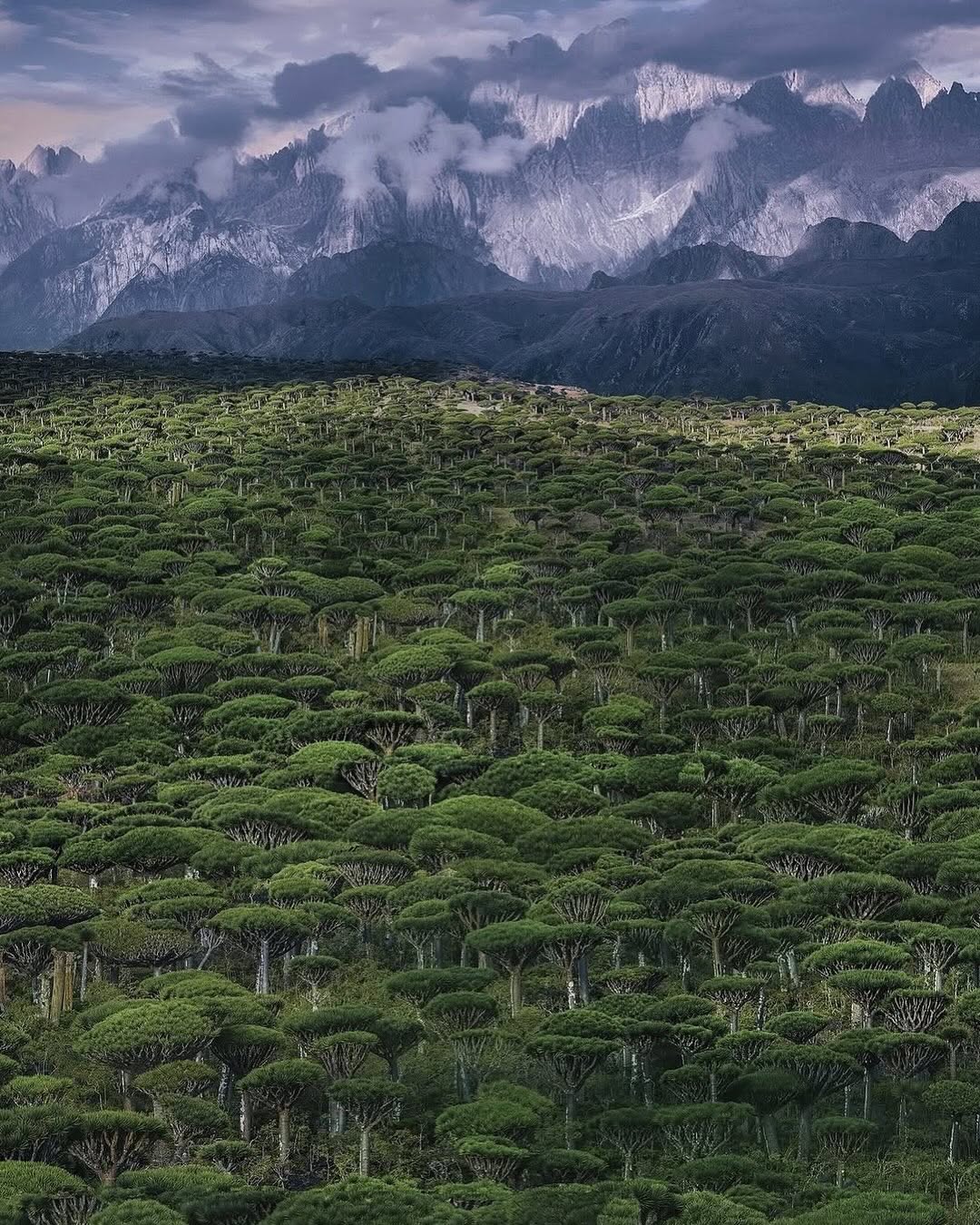
Nothing prepares you for your first sight of a Dragon's Blood tree (Dracaena cinnabari).
Its trunk is thick and pale, like the leg of some prehistoric creature. Above it, branches fork outward in a perfect, symmetrical canopy — flat and wide, like an enormous umbrella turned inside out by the wind, or the cap of a giant mushroom. When you stand beneath one, you feel genuinely small.
These trees exist in only one place on Earth: Socotra.
Their name comes from their sap — a deep crimson resin that bleeds from the bark when cut, the color of dark blood. Ancient Romans traded it as medicine. Socotrans have used it for centuries as everything from a dye to a breath freshener to a varnish. In laboratories today, scientists study its potential antimicrobial properties.
The Desert Rose Trees
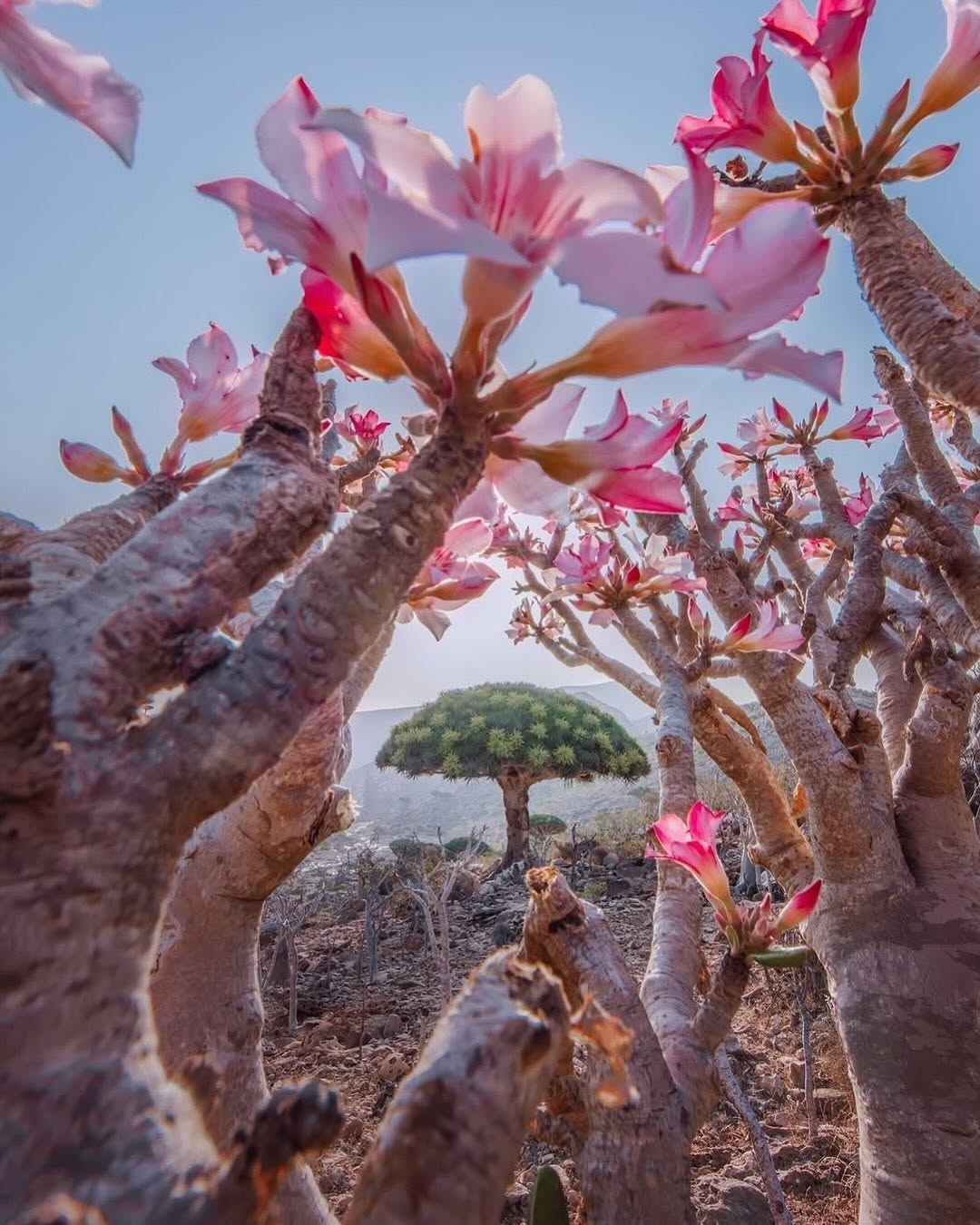
If the Dragon's Blood tree looks like something from a dream, the Desert Rose (Adenium obesum socotranum) looks like something from a fairy tale.
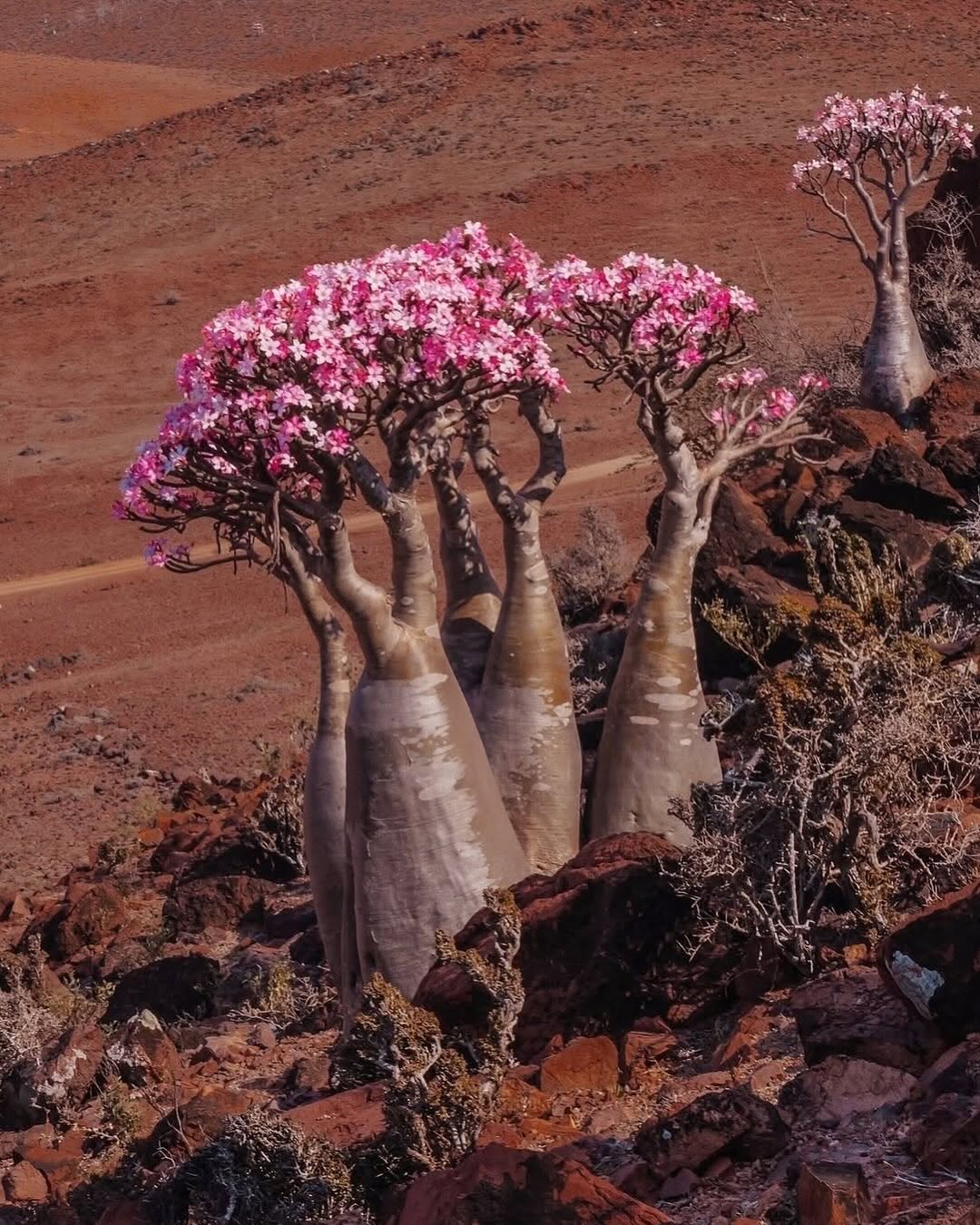
Its trunk is swollen and bottle-shaped, pale and smooth, storing water for the island's dry seasons. From this cartoon-like base, thin branches spiral upward, and at their tips burst clusters of vivid pink flowers — petals so delicate they seem almost paper-thin against the harshness of the red rocky terrain below.
The White Sand Dunes
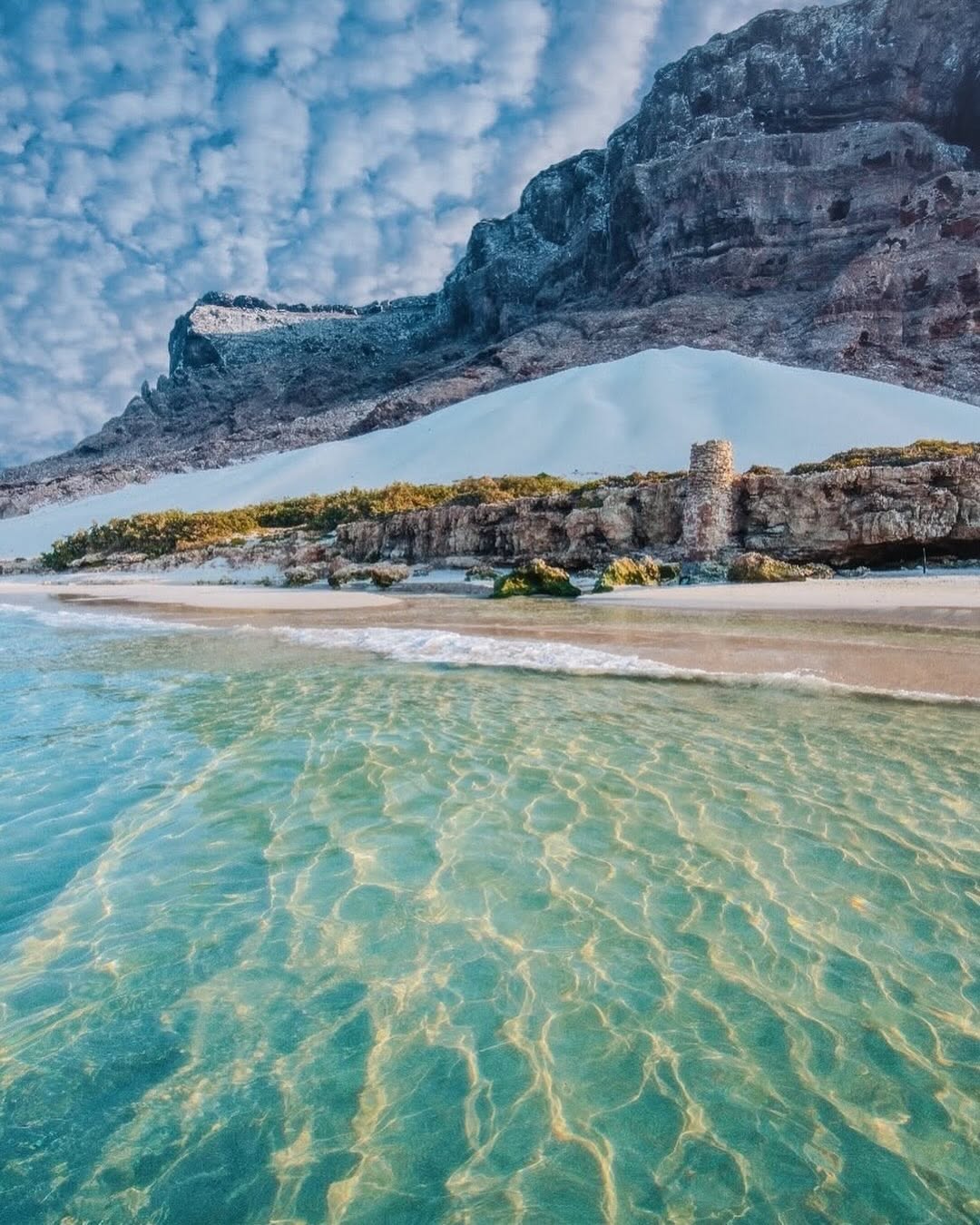
At the island's eastern edge, enormous white sand dunes press against sheer cliff faces, pouring down toward the turquoise sea in smooth, sculptural curves. Seen from the air, they look like a wave of fresh snow frozen mid-motion against the dark rock — surreal, impossible-looking, and completely real.
The Crystal Waters and the Stingrays
The waters around Socotra are some of the clearest on Earth.
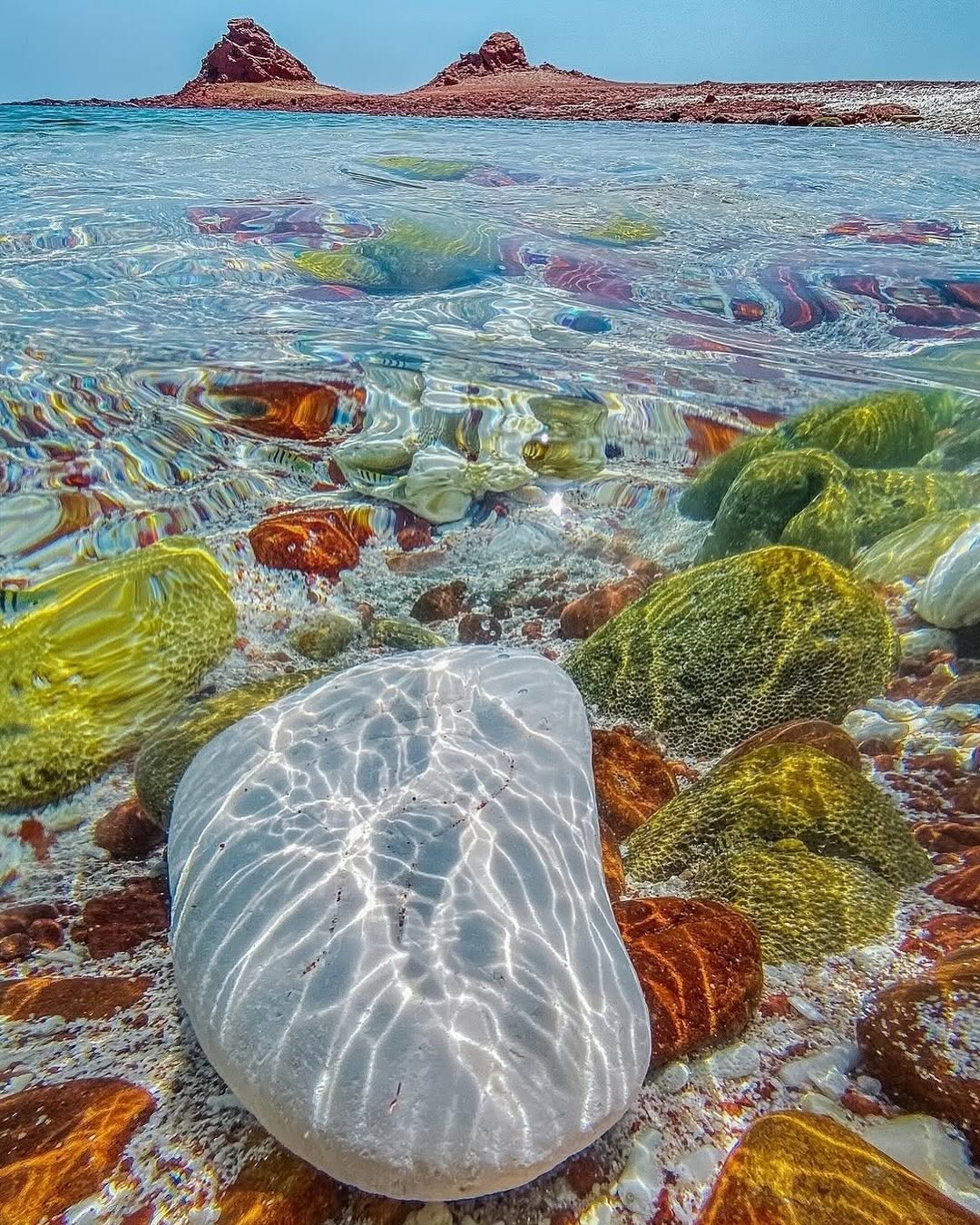
In the shallows near certain beaches, the seabed is a tapestry of color — white pebbles, green algae-covered stones, deep rust-red rocks — all visible through water so transparent it seems to barely exist. The Indian Ocean here runs in gradients from pale turquoise to deep sapphire, like a watercolor painting that forgot to stop.
The Science Behind the Magic
Socotra's extraordinary biodiversity is not an accident. It is the product of millions of years of isolation, combined with a unique position between multiple ecological zones.
The numbers are staggering:
- 825 plant species are found on Socotra, of which 37% exist nowhere else on Earth
- Over 90% of land snails on the island are endemic
- Nearly all reptile species found here are unique to Socotra
UNESCO recognized Socotra as a World Heritage Site in 2008, acknowledging what scientists had long known: that losing Socotra's ecosystem would be an irreplaceable loss for the entire planet.
A Paradise Under Threat
For all its beauty, Socotra exists in precarious balance.
The Dragon's Blood trees are dying faster than they can reproduce. Cyclones have uprooted thousands of centuries-old specimens. Meanwhile, invasive goats devour young seedlings before they can take root.
"I'm afraid this may be the last generation of this amazing tree," said the director of Socotra's Environmental Protection Authority.
Can You Visit Socotra?
Yes — though it requires planning and a tolerance for the adventurous.
The best time to visit is October through April. Visitors typically fly via Cairo or Oman to Socotra's small airport. Local guides lead visitors through the Dragon's Blood tree forests of the Dixam Plateau, to the white dunes at Archer's Post, and to the hidden lagoons of the island's interior.
Key Facts About Socotra Island
| Feature | Detail |
|---|---|
| Location | Arabian Sea, Yemen |
| Area | ~3,625 km² (main island) |
| UNESCO Status | World Heritage Site since 2008 |
| Endemic Plant Species | 37% of 825 total species |
| Iconic Species | Dragon's Blood Tree, Desert Rose |
| Best Time to Visit | October – April |
Before You Go: What Every Visitor Should Know
Getting there: Flights operate typically via Muscat or Cairo. Book well in advance.
Accommodation: Camping is the primary experience. Basic guesthouses exist in Hadibo.
Permits: Always travel with a registered local guide.
Responsible travel: Do not remove any plants, animals, or geological specimens. The island's biodiversity is protected by Yemeni law and international conservation agreements.
Socotra will not look the same in 50 years. If you ever have the chance to go, go. And if you can support conservation organizations working to save the Dragon's Blood trees, organizations like the Friends of Socotra are doing that work every day.