The End of the Ozempic Era: Inside Orforglipron, the Daily Weight-Loss Pill That Could Make Injections Obsolete in 2026

For nearly five years, the world's most talked-about weight-loss drug has come in a small auto-injector pen. You store it in the fridge. You jab it into your stomach or thigh once a week. You hate the needle, but you tolerate it, because the results are unlike anything medicine has produced for obesity in a century.
That entire era may end in the next few weeks.
Eli Lilly's orforglipron — a once-daily oral pill — has cleared the final stages of Phase 3 testing and is awaiting a U.S. FDA decision expected by the second quarter of 2026. If approved, it will be the first oral GLP-1 receptor agonist designed from the ground up for weight loss, and the first that does not demand careful timing around food. No injections. No refrigeration. No prescription monopoly. Just a tablet you swallow with your morning water.
For the roughly one in five American adults who have used a GLP-1 medication — and the millions more worldwide who could not afford or stomach the needle — orforglipron is shaping up to be the most consequential drug launch of the decade.
But this is not just Ozempic in pill form. The reality is messier, more interesting, and — for anyone considering whether to start, switch, or skip these drugs altogether — far more important than most coverage has acknowledged.
Orforglipron, if approved this quarter, would be the first oral GLP-1 designed specifically for weight loss.
What Exactly Is Orforglipron?
Orforglipron is a small-molecule GLP-1 receptor agonist. That last part — "small-molecule" — is the key. Every existing GLP-1 weight-loss drug you've heard of, including Ozempic, Wegovy, Mounjaro and Zepbound, is a peptide — a chain of amino acids that the stomach destroys before it can do anything useful. That is why they must be injected.
Oral Wegovy already exists, but it requires fasting for thirty minutes before swallowing, has lower absorption, and is essentially a workaround. Orforglipron is structurally different. It was engineered as a non-peptide molecule that survives digestion, gets absorbed reliably, and binds the GLP-1 receptor in the brain and gut just like its injectable cousins.
In everyday terms: a pill that does what the injection does, with none of the food-timing rules, refrigeration requirements, or sharps disposal.
The Trial Result That Stunned the Industry
In late 2025, Eli Lilly reported full data from ATTAIN-1, its pivotal Phase 3 trial in adults with obesity or overweight plus a weight-related condition. The headline number: patients taking the highest 36 mg dose for 72 weeks lost an average of 11.2 percent of their body weight, compared with 2.1 percent on placebo.
That is not as dramatic as Mounjaro or Zepbound, which can push 20 percent at their highest doses. But it is the largest weight loss ever achieved by an oral medication — and roughly in line with what semaglutide (the active ingredient in Ozempic and Wegovy) delivers via injection.
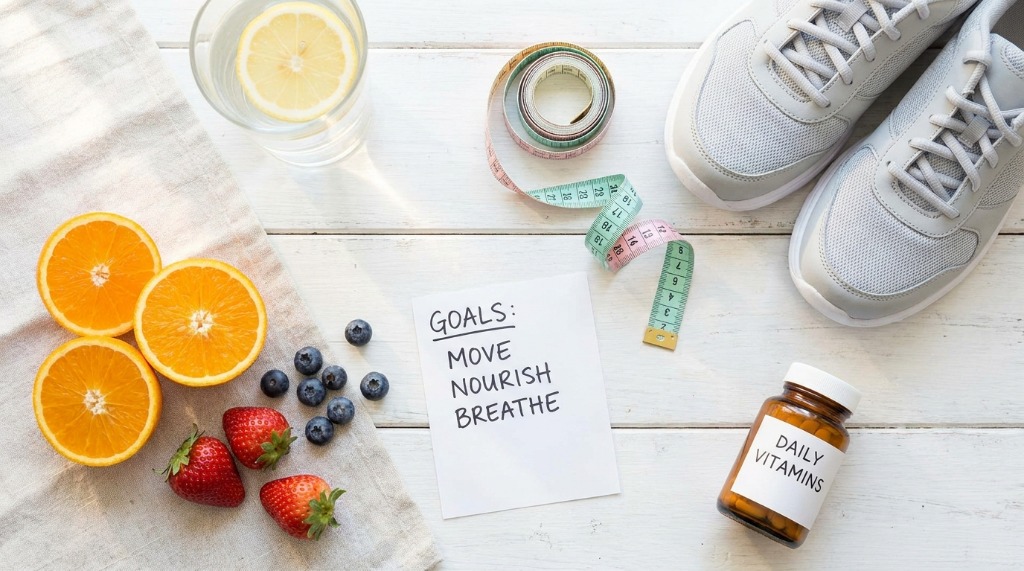 GLP-1s are not a magic bullet; they work best alongside lifestyle goals focused on movement and nourishment.
For context: a person weighing 100 kilograms could expect, on average, to lose about 11 kilograms over 72 weeks. Some patients will lose dramatically more. Some will lose almost nothing. GLP-1s, even at their best, are not uniform in their effects. The expanding research base — including a comprehensive review published in Nature Medicine in January 2026 — makes clear that individual response varies widely based on dose, baseline metabolic health, lifestyle, and likely genetic factors not yet fully understood.
The Real Showdown: Orforglipron vs. The Injection Empire
To understand why this matters, you need to understand the current landscape — because the marketing rarely makes clear what is actually different between these drugs.
Ozempic (semaglutide) is the original blockbuster. Weekly injection. FDA-approved for type 2 diabetes; widely used off-label for weight loss. Made by Novo Nordisk.
Wegovy (semaglutide) is the same molecule as Ozempic but at higher doses, FDA-approved specifically for chronic weight management and, more recently, cardiovascular risk reduction. Same manufacturer.
Mounjaro (tirzepatide) is a dual agonist — it hits both the GLP-1 receptor and the GIP receptor. Made by Eli Lilly. FDA-approved for type 2 diabetes. Produces higher weight-loss numbers than Ozempic in head-to-head trials.
Zepbound (tirzepatide) is the same molecule as Mounjaro, branded and dosed for weight loss. Also approved for obstructive sleep apnea, a notable expansion that most patients do not realize exists.
Orforglipron sits in a different lane. It is GLP-1 only, with no GIP component. Small-molecule. Oral. Daily. Eli Lilly is positioning it as the entry point — the drug your doctor might try first before stepping you up to a stronger injectable if needed.
The market implications are massive. The Mercer 2026 employer benefits survey found that 77 percent of large U.S. employers consider GLP-1 cost management "extremely or very important." A daily pill at a lower price point — which is exactly what Lilly is expected to offer — could blow the entire reimbursement landscape open.
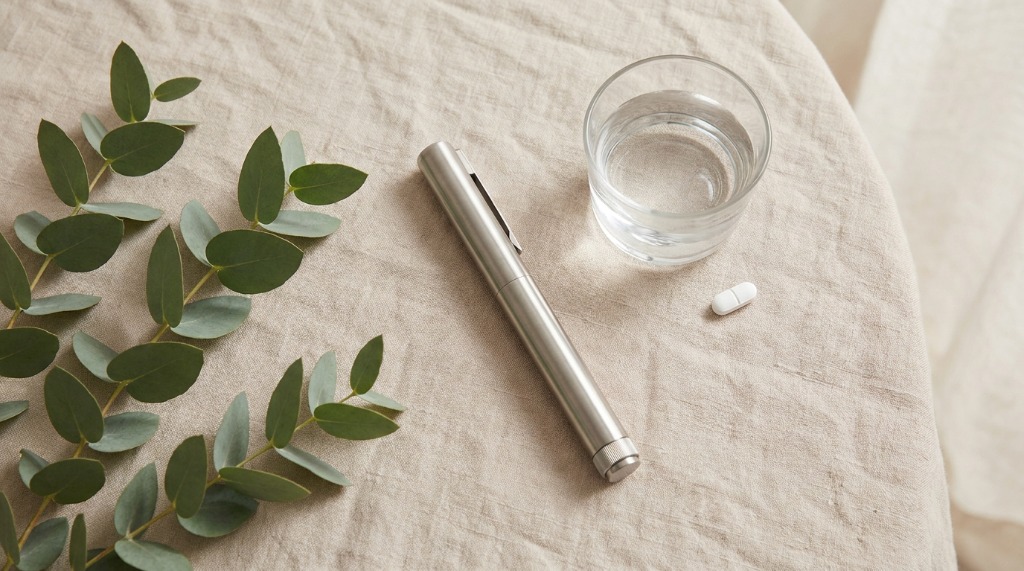 The shift from weekly injections to a daily pill could redefine how obesity is treated worldwide.
The Side Effects Nobody Wants To Talk About
Most coverage of GLP-1 drugs glosses over this part. The reality: side effects are common, sometimes severe, and the reason a stunning number of patients quit.
Data cited by Prime Therapeutics in its February 2026 GLP-1 pipeline update shows only one in twelve patients remain on GLP-1 therapy after three years. The most common reasons for stopping:
- Gastrointestinal effects. Nausea, vomiting, diarrhea and constipation. These usually ease over weeks but for some never fully resolve.
- Severe fatigue and muscle cramping. Often linked to magnesium and electrolyte depletion — a growing area of clinical focus among obesity-medicine specialists.
- "Ozempic face." Rapid fat loss in facial tissue, leading to a gaunt appearance, particularly in older patients.
- Sleep disruption. Multiple reports have linked semaglutide use to vivid dreams and restless sleep, though formal trials are limited.
- Pancreatitis. Rare but serious. Stop the drug and contact your doctor immediately if you experience unusual or persistent abdominal pain.
- Thyroid concerns. GLP-1s carry a boxed warning against use in people with a personal or family history of medullary thyroid cancer or multiple endocrine neoplasia type 2.
Orforglipron's side-effect profile in the ATTAIN-1 trial broadly mirrored the injectables: gastrointestinal effects led the list, mostly mild to moderate, mostly improving over time. No new safety signals so far. But long-term real-world data simply does not exist yet — that data only emerges from patients taking the drug after approval.
Who Should Not Be Taking These Drugs
GLP-1s are FDA-approved for adults with a body mass index over 30, or a BMI over 27 combined with an obesity-related condition such as type 2 diabetes, prediabetes, high blood pressure, high cholesterol, sleep apnea or fatty liver disease.
According to obesity-medicine specialists at the University of Utah Health, GLP-1s are generally not appropriate for:
- Cosmetic weight loss in people with a normal BMI
- Severe gastrointestinal conditions such as gastroparesis
- People with a personal or family history of medullary thyroid cancer or MEN-2
- Pregnant or breastfeeding women
- Patients with active eating disorders, where appetite suppression can compound underlying disease
Behavioral health screening matters. A history of trauma, disordered eating or significant mental-health challenges should be evaluated carefully before — and during — any GLP-1 therapy.
 GLP-1 therapy requires medical supervision and is not designed for cosmetic weight loss.
The Price Problem (And the Coming Generic Collapse)
Today, a one-month supply of brand-name Wegovy, Zepbound, Ozempic or Mounjaro typically runs between roughly $900 and $1,400 in the United States, before insurance and rebates. In many emerging markets — including Pakistan, India, the Philippines and most of Africa — the legal channels barely exist, and patients either go without or rely on gray-market imports of unclear provenance.
That picture is about to change quickly.
Canada is on track to become the first major market to offer generic injectable semaglutide for both diabetes and weight loss, with multiple manufacturers having already filed applications with Health Canada. Novo Nordisk is preempting the generics by launching two new lower-priced brand-name products of its own — Plosbrio and Poviztra — chemically identical to Ozempic and Wegovy respectively.
In the United States, semaglutide patents do not expire until roughly 2031 to 2033. Until then, the pressure point is going to be oral orforglipron. Eli Lilly has not announced pricing, but analyst estimates put it well below the injectables — closer to a few hundred dollars per month rather than over a thousand.
For employers, insurers and patients paying out of pocket, that is the headline. The drug that finally makes weight-loss therapy mass-market will probably be a pill, not a needle, and it is probably already in late-stage FDA review.
Beyond Weight Loss: What These Drugs Might Treat Next
This is where the GLP-1 story stops being a weight-loss story and starts being something much bigger.
The January 2026 review in Nature Medicine mapped the expanding landscape of conditions where GLP-1 medicines are now being actively studied:
- Cardiovascular disease. Already approved with Wegovy for risk reduction; Mounjaro is awaiting an FDA decision for cardiovascular risk reduction in type 2 diabetes patients, based on the SURPASS-CVOT trial.
- Obstructive sleep apnea. Zepbound is already approved here.
- Kidney disease. Ozempic is approved for slowing chronic kidney disease progression in type 2 diabetes patients.
- Liver disease. Wegovy received approval for metabolic dysfunction-associated steatohematitis (MASH).
- Alzheimer's and Parkinson's disease. Multiple trials are underway, exploring whether GLP-1s slow neurodegeneration.
- Addiction and substance-use disorders. Early trials are looking at alcohol and opioid use disorders. Anecdotal reports from patients describe reduced cravings for everything from alcohol to nicotine to compulsive shopping.
- Autoimmune conditions. Lilly is running Phase 3 trials of tirzepatide for psoriasis and psoriatic arthritis, with ulcerative colitis and Crohn's disease trials underway.
- Type 1 diabetes. Trials are exploring GLP-1 therapy with and without insulin support.
What You Should Actually Do With This Information
A few practical takeaways for anyone reading this in 2026:
If you are considering GLP-1 therapy for weight loss: Talk to a primary care doctor or obesity-medicine specialist. Bring your full medical history. Avoid gray-market online pharmacies — counterfeit semaglutide has become a serious global problem, with confirmed deaths in multiple countries.
If you are already on an injectable: Do not switch on your own. If orforglipron is approved this year, ask your prescriber whether transitioning is appropriate for your specific case. The injectables remain more potent at their highest doses; the pill's main advantages will be convenience and likely cost.
If you are a caregiver or family member: Watch for the muscle loss, dehydration and fatigue that can accompany rapid weight loss on these drugs. Adequate protein intake, resistance training and supplementation — particularly magnesium and electrolytes — are now considered essential adjuncts by most clinicians.
If you are outside the United States: Watch Canada closely in 2026 — it may become the cheapest legal market for these drugs by late this year or early 2027. Until then, work with a qualified local prescriber. Self-medicating with imported product is risky and, in some countries, illegal.
The Bigger Picture
The reason this story matters — beyond the cultural noise around Ozempic faces and Hollywood transformations — is that obesity is now classified by the World Health Organization as a chronic disease affecting more than 800 million people worldwide. For the first time in medical history, there are tools that treat it nearly as effectively as we treat high blood pressure or high cholesterol.
Orforglipron, if approved, will not be a miracle drug. No GLP-1 is. They require lifestyle changes, they have real side effects, and they often need to be taken indefinitely to maintain results — much like blood-pressure medication.
But the moment a daily pill replaces a weekly injection at potentially half the price, the entire conversation around weight loss shifts. For patients. For doctors. For insurance plans. And for the global health systems already buckling under the cost of obesity-related disease.
That moment is, quite possibly, a few weeks away.
Sources and Further Reading
- Nature Medicine — The expanding landscape of GLP-1 medicines (Drucker, 2026)
- U.S. News & World Report — Top Health and Nutrition Trends for 2026
- Mercer — GLP-1 considerations for 2026
- Prime Therapeutics — GLP-1 Pipeline Update, February 2026
- University of Utah Health — Common GLP-1 Questions Answered
- Mayo Clinic — GLP-1 Receptor Agonists
- Cleveland Clinic — Ozempic (Semaglutide)
- U.S. FDA — Medications for Chronic Weight Management